ADHD
- ·23M individuals in the US
- ·20-30% of stimulant-treated children experience clinically significant nightly insomnia
Unmet needMany treatments exist, but none also improves sleep

Anaka is developing AKA1315, a first-in-class, clinical-stage therapy in parallel development for executive function impairment in ADHD, Down syndrome (DS-EF) and autism, with pipeline-in-a-product franchise potential.
Executive function (EF), the brain's control system governing working memory, inhibition, cognitive control, planning, and attention, is significantly impaired in ADHD, Down syndrome, and autism. Across all three, no approved therapy is designed to directly stabilize the EF network itself.
Unmet needMany treatments exist, but none also improves sleep
Unmet needNo approved treatment for EF impairment
Unmet needNo approved treatment for EF impairment
Current treatments fall short
All existing options (stimulants, reuptake inhibitors, α2A agonists, and psychotropics) target monoamines, not the underlying prefrontal network dysfunction believed to drive EF impairment. None is designed to directly stabilize the affected neuronal firing. None improves sleep.
Down syndrome specialists describe a successful executive-function therapy as a potential blockbuster, and say better executive function is among the very top priorities families ask for.
Sources: de Graaf et al., Genet Med 2017; Eur J Hum Genet 2022; Skotko et al. estimates; Santoro et al., Genet Med 2020; Edgin et al., Neurosci Biobehav Rev 2015; Diamond 2013; Fidler 2005, 2009; Churchill et al., Sleep Med Rev 2015.
Over three decades, co-founder Mario Sanchez systematically observed that compounds stabilizing neuronal firing produced consistent improvements in executive function across ADHD, Down syndrome, and autism, while standard neurotransmitter-targeting drugs did not. This hypothesis led directly to identification of AKA1315.
The driver of EF impairment
EF impairment reflects a pattern of unstable prefrontal cortex (PFC) network activity, characterized by:
Our mechanism
AKA1315 directly stabilizes neuronal firing via dual-state ion channel modulation:
AKA1315 is the only therapy in development with early human signal across executive function, sleep, and mood in more than one neurodevelopmental condition, and one of the lowest regulatory-risk profiles of any active program in this space.
Neurodevelopmental drug programs typically fail for well-understood reasons: poorly characterized mechanisms, high placebo response, and unproven formulations. AKA1315's plan is designed to retire each of those risks in sequence, before the next dollar is spent.
AKA1315 combines components with decades of established clinical safety data, removing the discovery-stage toxicology risk that sinks many CNS programs.
The modified-release formulation is the single genuinely new element in the program, gated by an objective pharmacokinetic readout before advancing.
Consistent, early signals in executive function, sleep, and mood have been observed across three distinct conditions, ahead of the controlled studies designed to confirm them.
Each phase is tied to pre-committed, objective go/no-go criteria, so capital is only deployed once the prior risk has been retired.
AKA1315 targets the EF network layer shared across multiple neurodevelopmental conditions. ADHD and Down syndrome executive function (DS-EF) are being developed in parallel as lead indications, with autism spectrum disorder as a follow-on franchise opportunity built on the same mechanism.
ADHD
Lead indication
Preliminary human signal*
Current stage: In planning
Down syndrome executive function (DS-EF)
Lead indication
Preliminary human signal*
Current stage: In planning
Autism spectrum disorder
Follow-on
Preliminary human signal*
Next: Future
* Preliminary human signal is based on investigator-initiated, open-label experience and case series with the program's component therapies; it is not controlled clinical efficacy evidence for the final AKA1315 formulation. ADHD = attention-deficit/hyperactivity disorder; DS-EF = executive-function impairment associated with Down syndrome; FDC = fixed-dose combination.
Our team brings together deep neuroscience and Down syndrome expertise, more than 100 years of drug development, and 30+ years of clinical insights across ADHD, DS, and autism -- built specifically to execute in neurodevelopmental conditions.

President · CEO · Co-founder

Chief Medical Officer · Chief Development Officer · Co-founder

Chief Scientific Officer

Head of Formulation & Manufacturing

Scientific Originator · Co-founder
In memory of Mario Sanchez, who passed in April 2026. His clinical insight is the foundation of this work.

Clinical Prof. of Psychiatry, SUNY Upstate; PI on 400+ CNS & ADHD clinical trials
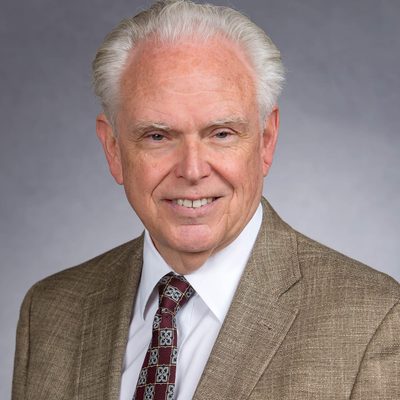
Distinguished Prof. & Exec. Dir., UCSD Down Syndrome Center; DS neurobiology leader

Chief of Translational Science, Loulou Foundation; ex-Roche DS & autism clinical lead

Pediatric neuropsychiatrist; ex-Autism Speaks & GSK; CMO across multiple CNS biotechs
We welcome conversations with potential investors, partners, and collaborators aligned with our mission to address the significant unmet need of executive function impairment across neurodevelopmental conditions.
Lexington, MA · Greater Boston Area
Hampus Hillerstrom
President, CEO, Co-founder